- Home
- Our Community
- Our Faith
- Our Ministries
-
Parish Life
- Calendar of Events
- St. Aidan's Video Links
- Parish Blog
- News Archive
- Mass Etiquette and Information
- Ad Orientem News and Facts
- Catholic Links
- Prayers and Announcements
- Luis Dizon Reflections - Archive
- Bulletin
- Contact Us
- Search
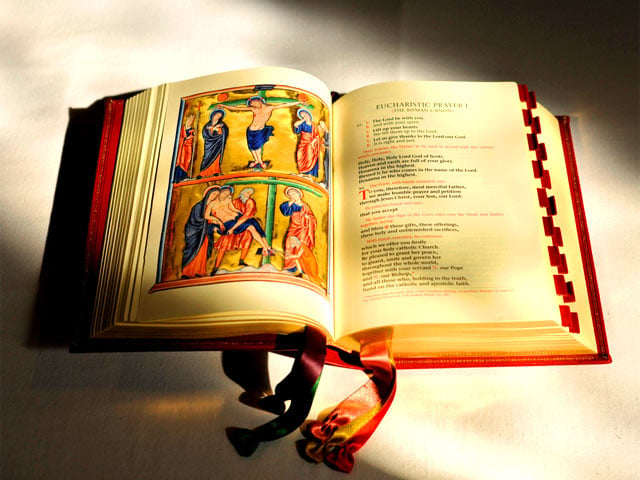
Christ Crucified (5th Sunday in Ordinary Time)
Click here for this Sunday’s Readings
Click here for this Sunday’s Old Testament (The God of Justice)
In the previous Sunday reading, St. Paul spoke about how God chose those that were considered foolish in this world to shame those who were considered wise. Here, he expands on this theme of upending worldly standards of wisdom by speaking about his own source of wisdom, as well as where the persuasive power of his speech comes from.
In the ancient world, rhetoric was considered a highly prized art form. Speakers sought to craft speeches according to generally accepted rules of eloquence, all in an attempt to show their rhetorical prowess. Paul is declaring here that, by contrast with the clever sophists of his age, he did not rely upon his rhetorical prowess. In fact, elsewhere he declares that his opponents claim that “his bodily presence is weak, and his speech of no account” (2 Corinthians 10:10). This is all meant to highlight the fact that, his persuasive power does not come from his own rhetorical ability, but the Holy Spirit working in him. As he declares later in the epistle, nobody can be persuaded of his message and accept Christ as Lord except by the Holy Spirit (1 Corinthians 12:3).
He also contrasts the worldly wisdom of the sophists with the divine wisdom of his message. He emphasizes the fact that all the wisdom of his message comes from “Christ Jesus, and Him crucified” (v. 2). This is because, as he states in another epistle, “in Christ are hidden all the treasures of wisdom and knowledge” (Colossians 2:3). Worldly “wisdom,” which Paul has been contrasting with divine wisdom, is only outwardly impressive, and lacks the basis in reality that God’s wisdom has, because it is not rooted in the Creator of the universe.
Paul’s message continues to be relevant today as the Christian message becomes ever more incomprehensible to our secular culture. We should not be surprised when that message appears foolish to the world, for the Gospel is ultimately not based on superior reasoning, but on Christ crucified.
J. Luis Dizon